
As Africa’s energy sector deregulates, exciting opportunities open up for financial innovation to benefit consumers. Private-sector buyers and traders can mitigate default risk and provide certified green energy at lower cost, writes ANA HAJDUKA, founder and CEO of Africa GreenCo.
Africa’s renewable energy potential is undeniable, but it remains largely untapped. The problem is that the financing landscape for renewable energy and other projects in Africa was previously reliant on state utilities as buyers.
The scale of projects that could be financed in a country was therefore limited by the fiscal capabilities of that country and the sovereign guarantees it could provide.
This traditional model of relying on countries to provide such guarantees has faced recent challenges, because of increasing debt burdens, and shifting economic priorities.
Opportunities have therefore emerged for innovative financial approaches that will ensure more guarantees can be acquired from other sources and that risk can be diversified across a portfolio of suppliers and customers.
This would see more projects achieving financial close, to ultimately provide more African people with clean energy. There is also room to not only grow new renewable energy supply, but to create new renewable energy markets on the continent, where that supply can be sold.
As a consequence, the market is opening up to allow alternative buyers of new renewable energy, which can utilise existing regional competitive energy markets to diversify its risks.
Transmission capacity
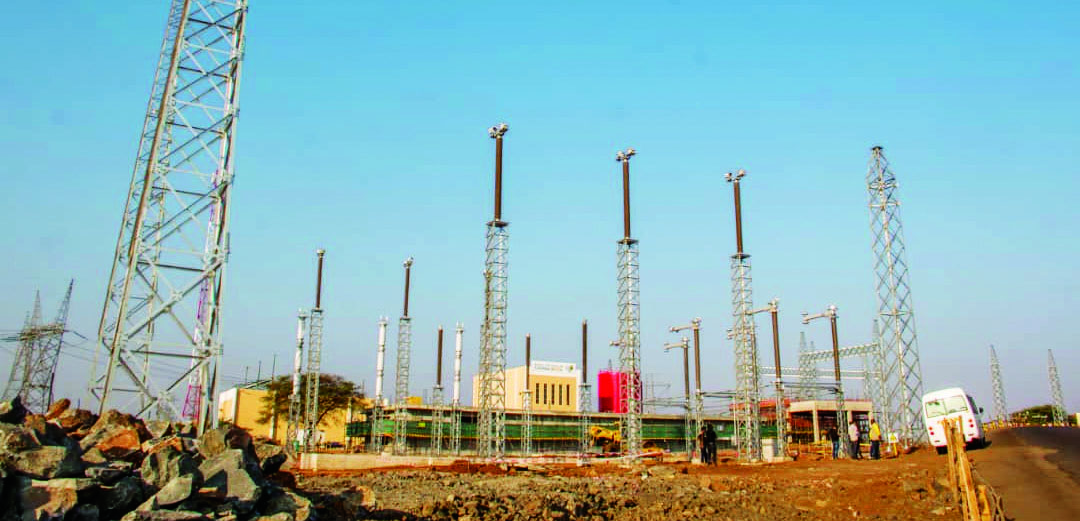
Transmission constraints are another factor in this emerging scenario. The development of the electricity sector across the region effectively has a ceiling, determined by the available transmission network for new generation.
Previously, development finance institutions would only fund state utilities, and then only when it was proved that sufficient generation would be coming on board to utilize any new transmission infrastructure.
Now, thanks to the growing liberalisation focus in the region, allowing new private sector participants to buy and trade power, these transmission funding inflows can be facilitated. This new supply will be critical to making new transmission investments bankable.
If the private sector can sufficiently guarantee that any proposed new capacity coming on board will utilise the necessary transmission infrastructure, that new capacity effectively backs the viability of the new transmission investing – bringing a direct value add to the state utilities in South Africa and the rest of the SADC region.
Regulator readiness
But for all of this to fall into place, we need a convergence of the relevant regulatory readiness-and we are already seeing this cross the region. In many South African Development Community (Sadc) countries, new legislation is providing the regulatory clarity that the private sector requires to venture into supply, transmission and trade.
The entire ecosystem must work for new entrants, and lenders. Until now lenders have seldom considered state utilities to be creditworthy, and they have required significant fiscal guarantees to cover the power-purchase obligations of those utilities.
That model is double whammy. Not only does it encumber utilities with debt for new generation, but it hits the national fiscus as well.
New licences
Across the region, markets are liberalising rapidly. South Africa has shown it can happen almost overnight, as in the case of country’s generation regulations. This has allowed third-party wheeled projects in the market such.
This shows how market thinking about the development of the electricity sector has fundamentally changed. There is collaboration like never before.
Financial innovation must happen in a way that makes lenders comfortable. What that looks like in our case is that all our payment obligations are backed by an internationally AA-credit related guarantee provider GuarantCo.
We are entering the South Africa market operationally ready to supply customers within South Africa and outside; and with financial readiness in the form of innovation guarantee structures to be considered bankable in the market.
The ultimate beneficiaries of this financial innovation must be the customers. Many are looking to decarbonise their operations-for climate change reasons, and to make their products competitive on international markets.
Affordable is another key consideration. In our case, by being able to provide sufficient operational and financial risk mitigation to the lenders of the generators that supply to us, we can supply electricity far more affordably.
Around 70 percent of the costs of a generation or renewable energy project is from the cost of debt. Therefore, the more bankable an off taker is. The lower the debt costs, and the cheaper the electricity -a clear demonstration of the benefits of financial innovation Tor the end customer.
Source: The times group-19 august 2024.