

With less than four years to the projected commencement date for the $1.21 billion (about K988.93 billion) Fufu and Kholombidzo hydro power projects, there seems to be no clear direction.
This is despite successful completion of full feasibility studies, geotechnical investigations and environmental and social impact studies as well as the preparation of the tender documents for the development of the projects.
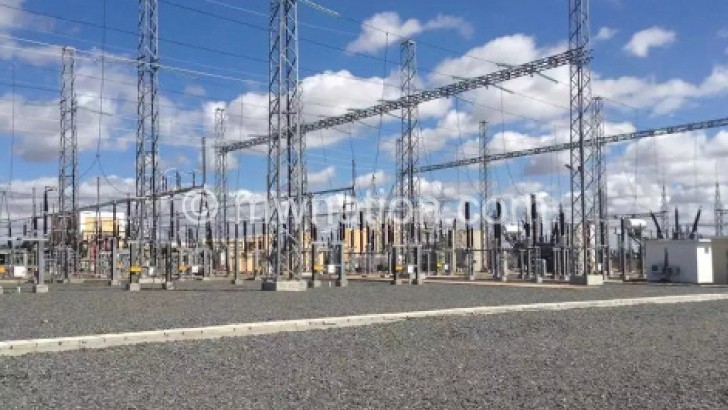
Information sourced from the Ministry of Energy indicates that financing for the development of the projects is not yet identified, but government wants to develop the projects under the Public Private Partnership (PPP) arrangement.
When asked on progress of the projects, director of energy Cassius Chiwambo was tight-lipped, saying things were still cooking.
PPP Commission chief executive officer Patrick Kabambe said in an interview that they work on directives from the ministry, but said theyare yet to start working on the projects.
In Malawi, electricity penetration is at a paltry 10 percent out of 18.5 million people, according to the 2018 Population and Housing Census.
The country is currently facing power supply challenges with hydro-electric generation capacity, the main source of energy in Malawi, reduced from the potential demand of 351 megawatts (MW).
At present, Electricity Generation Company (Egenco), the main producers of electricity in Malawi, generates power mainly from hydro power facilities with a total capacity of 367MW located on the cascade of Shire River at Nkula, Tedzani, Kapichira Falls and at Wovwe on Wovwe River.
Energy expert Grain Malunga said the commencement of the projects is crucial given the electricity shortfalls in the country.
He said the projects, if properly and quickly implemented, have huge potential to improve electricity supply in Malawi.
Malunga, a former minister of Energy, said: “These are big and important projects, which the government needs to look at. Malawi currently envisages transforming the country into an inclusively wealthy and self-reliant, industrialised, upper middle-income country by 2063.
“This will, however, not be achieved if energy is out of the picture. It is projects such as these that would ensure the realisation of these dreams; hence, the need to fast-track their implementation if the country is to achieve its goals.”
In an e-mail response, Malawi Energy Regulatory Authority spokesperson Fitina Khonje admitted that the country needs to improve on power generation capacity.
She said: “Once the government and Power Market Limited finalise their process, which includes arranging power purchase agreements [PPAs], we will not hesitate to discharge our duties and responsibilities.
“We will scrutinise the PPAs to ensure coherence with laws, regulations and standards and cost-effectiveness.”
The Fufu hydro power project is located in the Northern Region on the South Rukuru River.
The design capacity of the high head hydroelectric power plant is 261MW and the investment cost is estimated at $702 million (about K573.74 billion).
The project is planned to be implemented by the private sector, with the construction period of five years starting in 2024 and to be fast-tracked depending on the availability of financing.
Kholombidzo, on the other hand, is located in the middle of the Shire River, upstream of Nkula Falls and the first falls downstream of Liwonde.
The power plant is meant to rely on water from the Shire River and it is expected to provide 210MW.
The project, whose total cost is approximately $511.5 million (about K 418.05 billion), is expected to be implemented in 66 months, including a development phase of 18 months and a construction period of 48 months.
Source: The Nation_November 4, 2021_By Orama Chiphwanya-Staff Reporter