
Power outages are back to haunt Malawians as Electricity Supply Corporation of Malawi (Escom) has revived a six-hour rolling loadshedding due to reduced supply and generation from Electricity Generation Company (Egenco).
In a statement dated October 1 2019, Escom attributed inadequate availability of power to failure of two of Egenco’s generation machines at Kapichira Hydro Power Station in Chikwawa and 20 megawatts (MW) diesel-powered generators at Mapanga in Blantyre.
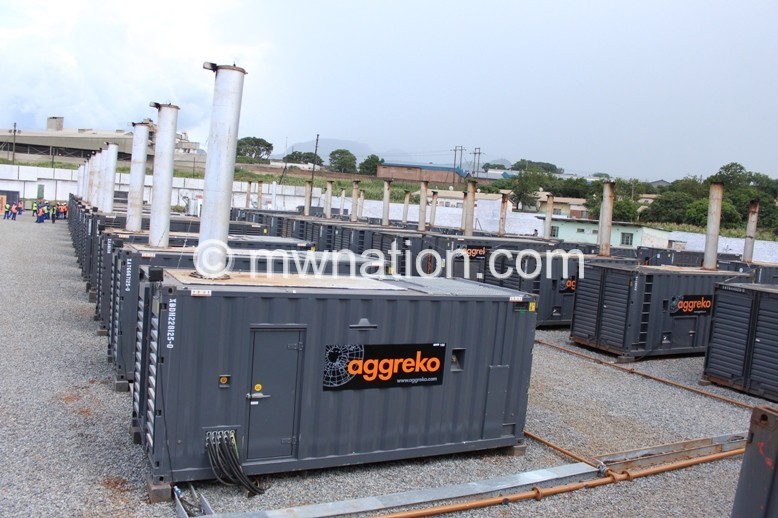
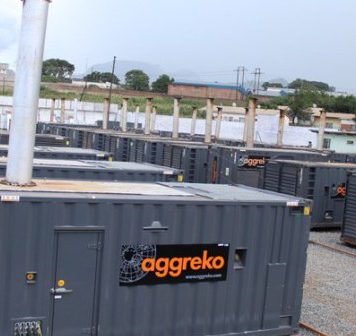
Reads Escom’s statement in part: “Currently, Aggreko diesel generators are online, but our main power supplier Egenco is experiencing restrictions to supply Escom due to failure of their two machines at Kapichira and also failure of 20MW diesel generators at Mapanga. This, combined with further decline in water flow, has resulted in reduction of available power by 86.48MW.
“As such, Escom has been forced to implement a six-hour rolling power rationing from 5am. Customers have been divided into three groups, A, B and C, with one group starting from 5am to 11am, followed by a 10am to 2pm group and the last load shedding period is from 3pm to 9pm”.
Escom public relations manager Innocent Chitosi indicated in an interview last evening that as of Tuesday, the power supplier had 263MW at peak hour against a demand of 303.1MW. This represents a 40MW deficit.
In a written response last evening, Egenco spokesperson Moses Gwaza confirmed that Kapichira units 1 and 2 are on emergency outage to replace obsolete and worn-out excitation systems.
He attributed the persistent breakage of the plant to the old equipment at the site. The development has taken 64.8MW from Kapichira I Hydro Power Station off the national grid.
Gwaza said Egenco plans to complete maintenance works by October 12.
Reacting to the resurfacing of power outages, Consumers Association of Malawi (Cama) executive director John Kapito expressed anger over the introduction of six-hour load shedding.
He described it as “disheartening” as power outages affect the economy of the country.
Kapito stressed the need for the country to find a lasting solution on issues to do with electricity generation, adding that Escom cannot supply what is not being generated.
He said: “I am very surprised to hear that the same plant we were told about a week ago that power has come back is down.
“But now to be told again that it is down is very unfortunate and this is costing a lot of money to the economy. They are also bringing a lot of inconveniences to households. It is something we would have loved to find a lasting solution to these problems of power outages”.
Malawi Chambers of Commerce and Industry (MCCI) is on record as having said load shedding cost negatively impacts the economy as it slows down economic growth.
Last year, captains of industry reported shrinking production attributed to power outages. Ministry of Finance, Economic Planning and Development was also compelled to revise downwards economic growth rate due to power outages.
During the launch of the 55MW capacity diesel generators to boost power supply at the height of loadshedding which hit a record 25 hours a day in January 2018, President Peter Mutharika said government planned to increase power generation.
He said: “Within five years, we will be able to generate over 1 400MW of coal-fired, about 700MW of hydro-power and 70MW of solar energy.
“We will do that in the next two to three years.”
Mutharika also said by this year, 2019, his administration was determined to add an extra 300MW of electricity to the national grid “more than the 351MW we have had for the past 53 years”.
In its 2017 Malawi Business Climate Survey, MCCCI highlighted electricity as the most problematic sector.
Malawi continues to face power supply challenges from the national grid despite several independent power producers (IPPs) being licensed.
Most of the licensed IPPs are yet to rollout. Some of them, including one each in Dedza and Salima, were expected to take off by August this year but are yet to add their power to the grid.
Escom has set a target of 2022 as the time when power supply will meet demand.
Source: The Nation_October 3, 2019_by Jonathan Pasungwi-Staff Writter