
The Energy kiosk model is an approach aimed specifically at providing electricity to low income households in off-grid regions. The kiosk produces electricity, usually using a solar panel, and sells it to users through charging devices. A variety of actors, including multi-national companies, start-ups, governmental initiatives, and non-governmental organisations – are engaged in energy kiosk initiatives. The Kiosk model is a simple yet effective method of providing communities with charging station for lamps and batteries, or multi-service station offering retail products, entertainment and education.
Bvumbwe Kiosk is one of the kiosks Renew’N’Able Malawi is implementing in order to give communities access to electricity so that they can ably reduce some challenges they are facing. The Kiosk has a charging station for lamps and batteries, it offers battery and solar panel rentals and lamp sales.
Bvumbwe kiosk has existed for 7 years, and has given job opportunities to community members who have been working as entrepreneurs at the kiosk. Furthermore, Bvumbwe Kiosk has created a difference in the lives of beneficiaries.
Group Village Head William, one of the beneficiaries of the Kiosk, said the 7 year-journey with access to lamps, batteries, solar panels has been full of enjoyment.
“We can charge our phones, light the house and watch TV. Our life has completely change,” he says while watching a movie on his TV Screen. “My village is now developing. My people are able to sve money on buying torch batteries and candles for other activities because of this Kiosk,” he enlightened.
“Before this Kiosk life was miserable. My people were sleeping in the dark, pupils were not able to study and do their assignments,” he narrated.
Peterson Kalonga Chekani, another beneficiary, a teacher by profession, says he does not want to live in town anymore because the kind of life in the village is not much different with those in town. “The kiosk has brought tremendous change to performance of our leaners. In the last three years we have seen a significant number of standard 8 learners passing their exams in comparison to previous years. Learners often used paraffin lamps and candles to study which was not healthy.”
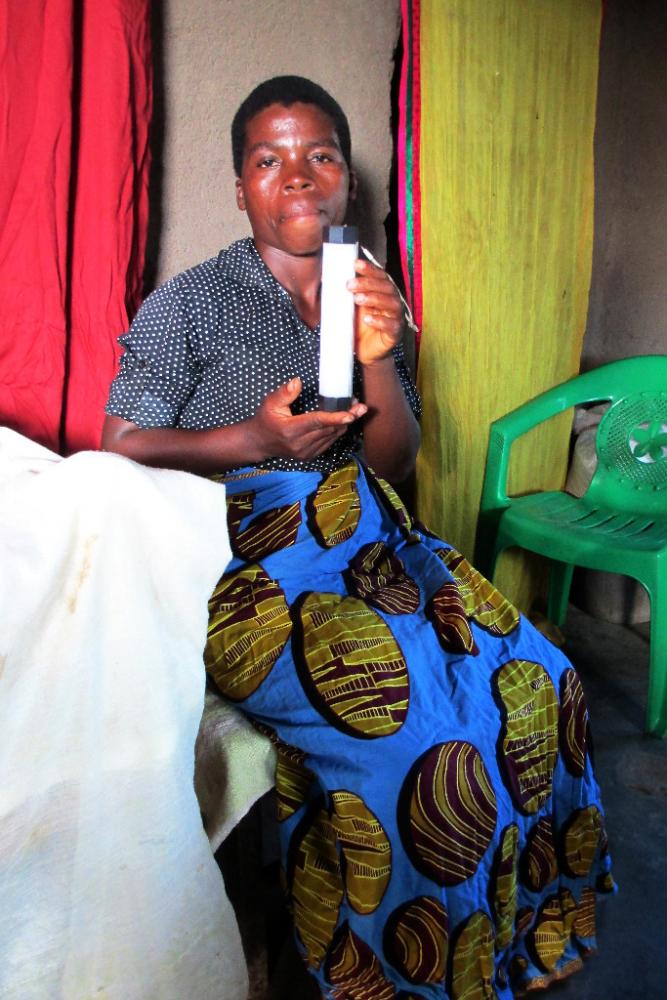
“I used to struggle to get money for paraffin and candles and would mostly sleep in the dark. Now with this lamp which lasts for 7 days at K100.00 per day, I am able to charge my phone, walk at night when going to my business place, without any fear because of this lamp”. “And I thank God for giving us this opportunity that saved us from spending money on paraffin and candles,” says Madalitso Chiponda. “I have bought my pig because I made savings with this lamp,” she explained
Another beneficiary, Elias Mpandazoni; says he and his family find their life easy because of the kiosk. “My plea will go to my fellow community members to safeguard the kiosk. We should not abuse the kiosk, we need to pay any balances on the pay as you go program (loans) we have so that we continue enjoying the benefits of the kiosk,” Mpandazoni explained.
The Energy kiosk model is hailed as an innovative solution to the energy poverty that threatens the country’s development. If communities that are far from the national grid are given an opportunity to own an Energy kiosk, then the education and health sectors will enhance their services. This will also encourage teachers and nurses to stay in hard to reach communities as energy access is more often than not a stumbling block in retaining them.